
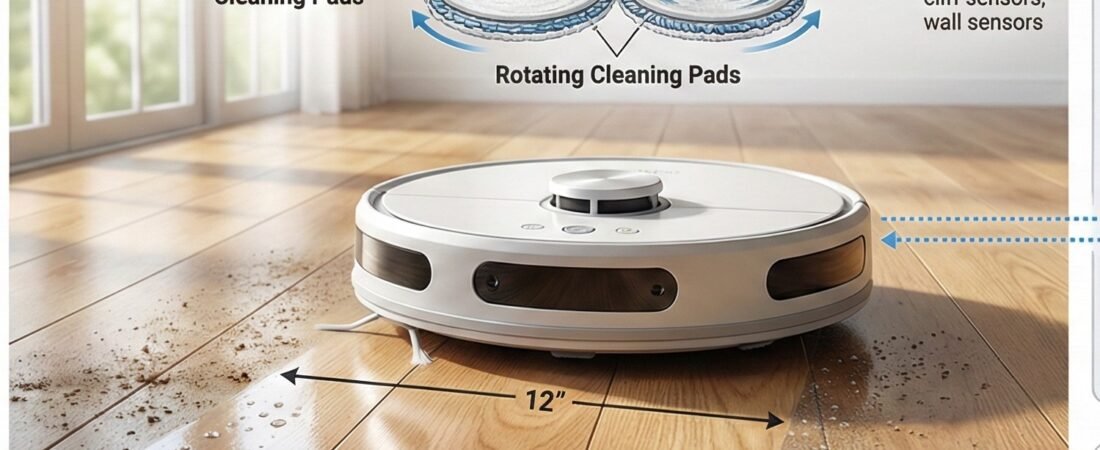
Introduction: When AI Moves Off the Screen and Into Your Home
When people think of artificial intelligence, they usually think of chatbots, automation software, or digital tools used on a screen. But some of the most practical, everyday applications of AI now live quietly inside physical devices—making decisions, adapting to environments, and handling tasks we used to do manually. One of the clearest examples of this shift is the modern robot vacuum cleaner and mop.
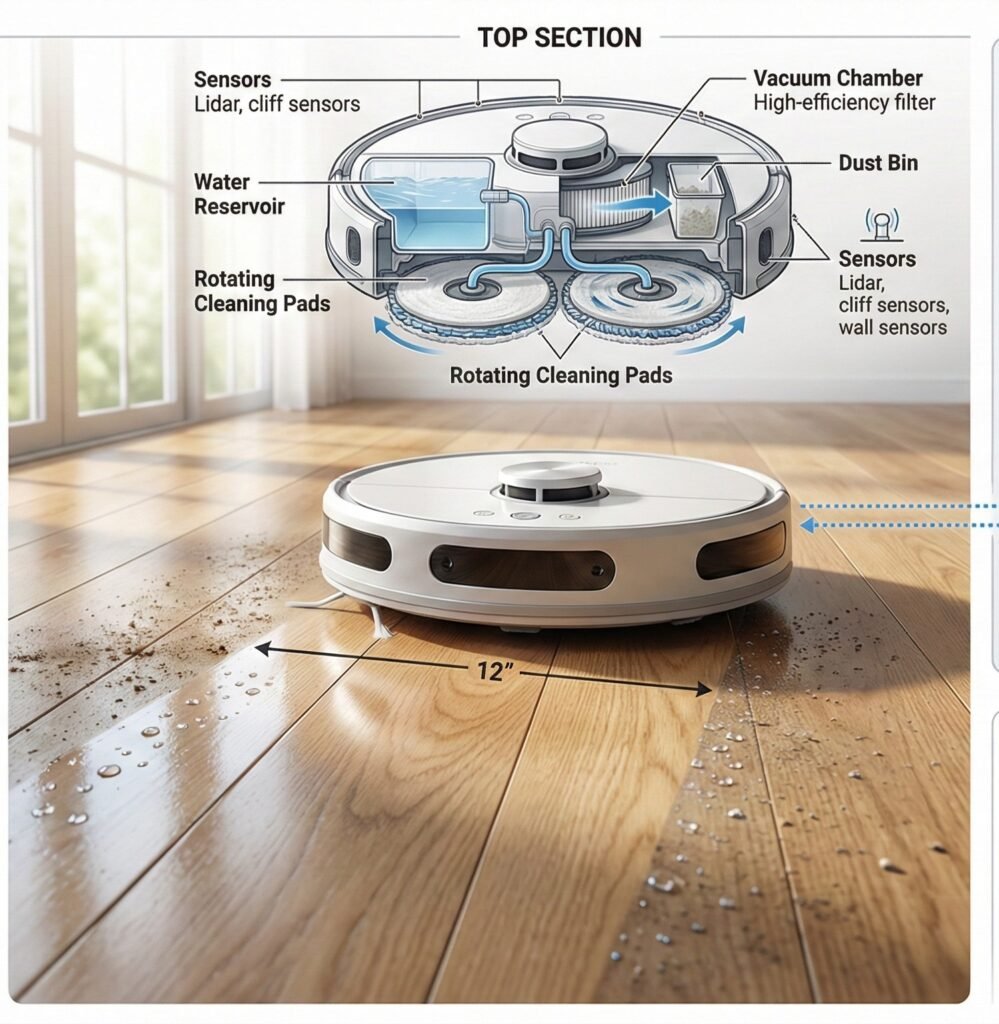
Today’s robot vacuum and mop combos are no longer simple machines that bounce around randomly. They use AI-powered navigation, object recognition, and adaptive cleaning logic to map homes, avoid obstacles, adjust behavior between hard floors and carpets, and even decide when to return to a docking station to clean their own mop pads before continuing. In this guide, DigitalToolsHub takes a practical look at what these AI-driven cleaning systems actually deliver in real homes, which features matter most, and how to choose the right setup for your space—whether you’re buying your first smart cleaner or upgrading from an older model.
Key Takeaways
- Modern robot vacuum cleaners and mops are AI-powered systems, not simple appliances. They use mapping, object detection, and adaptive logic to clean more intelligently than older models.
- The self-washing dock is the feature that makes mopping practical long-term. Without it, most robot mops end up spreading dirty water.
- Scrubbing-style mopping (spinning pads, vibrating pads, or roller mops) performs far better than flat pads that simply drag across the floor.
- Robot vacuum and mop combos work best in homes with mostly hard floors and some rugs. Carpet-heavy homes may still benefit from a dedicated robot vacuum.
- Real-world performance depends more on navigation, obstacle avoidance, and dock automation than on headline specs like suction numbers.
- The best results come from choosing a system that matches your floor plan, lifestyle, and tolerance for maintenance, not the most expensive model.
Table of Contents
- Hands-on: what impressed me (and what it proves)
- The 5 features that determine whether a combo is “excellent” or “annoying”
- Carpet reality check (so you don’t buy the wrong thing)
- Best robot vacuum and mop combos to consider in 2026
- Buying checklist for your home
- Conclusion- Where AI in Home Cleaning Actually Makes Sense
- FAQs
1) Hands-on observations: what impressed me (and what it proves)
I recently watched one of these robots run through a home from room to room—under beds, couches, and along edges—then announce it was going back to wash the mop at intervals and returned to continue from where it stoped. The result looked genuinely well-mopped, not just “wiped.” That’s the benchmark this article is based on.
These are the “green flags” that usually indicate you’re looking at a higher-tier system:
A) It cleaned under low furniture without drama
Ultra-slim bodies and smart navigation matter because dust lives under beds and couches. Some flagship designs explicitly prioritize low-clearance reach (for example, Roborock markets the Qrevo CurvX as 3.14 inches / 7.98 cm).
B) It vacuumed first, then mopped (instead of smearing debris)
The best workflow is dry clean → wet clean. This is a practical difference you can see on the floor.
C) It returned to the dock to wash mop pads mid-clean
This is the difference between “mopping” and “spreading dirty water.” Several modern docks use hot water washing + drying as part of the hygiene loop.
D) It handled carpets intelligently
High-end models either lift the mop, avoid carpets during mopping, or in some designs even remove mop pads before carpet runs (varies by model line). The core point: carpet handling is no longer an afterthought in the top tier.
2) The 5 features that matter most (in priority order)
1) Mop design: scrubbing beats “wet rag dragging”
If a combo uses only a flat wet pad with minimal agitation, it often leaves streaks and doesn’t remove dried spills well. Systems that scrub—dual spinning pads, vibrating pads, or roller mops—tend to deliver noticeably better results.
Example of this design approach: Yeedi markets its OZMO roller system as a scrubbing-style mop that spins at 200 RPM (product-line claim).
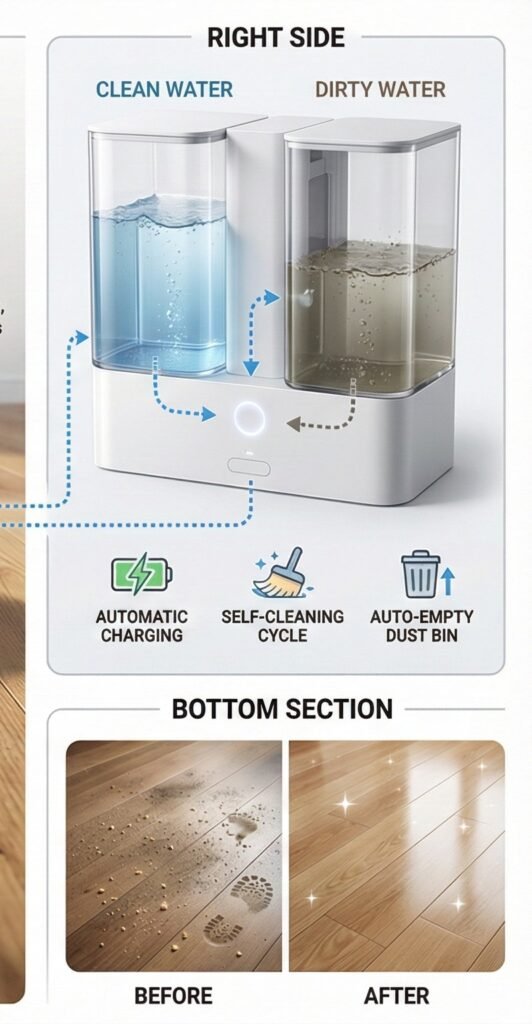
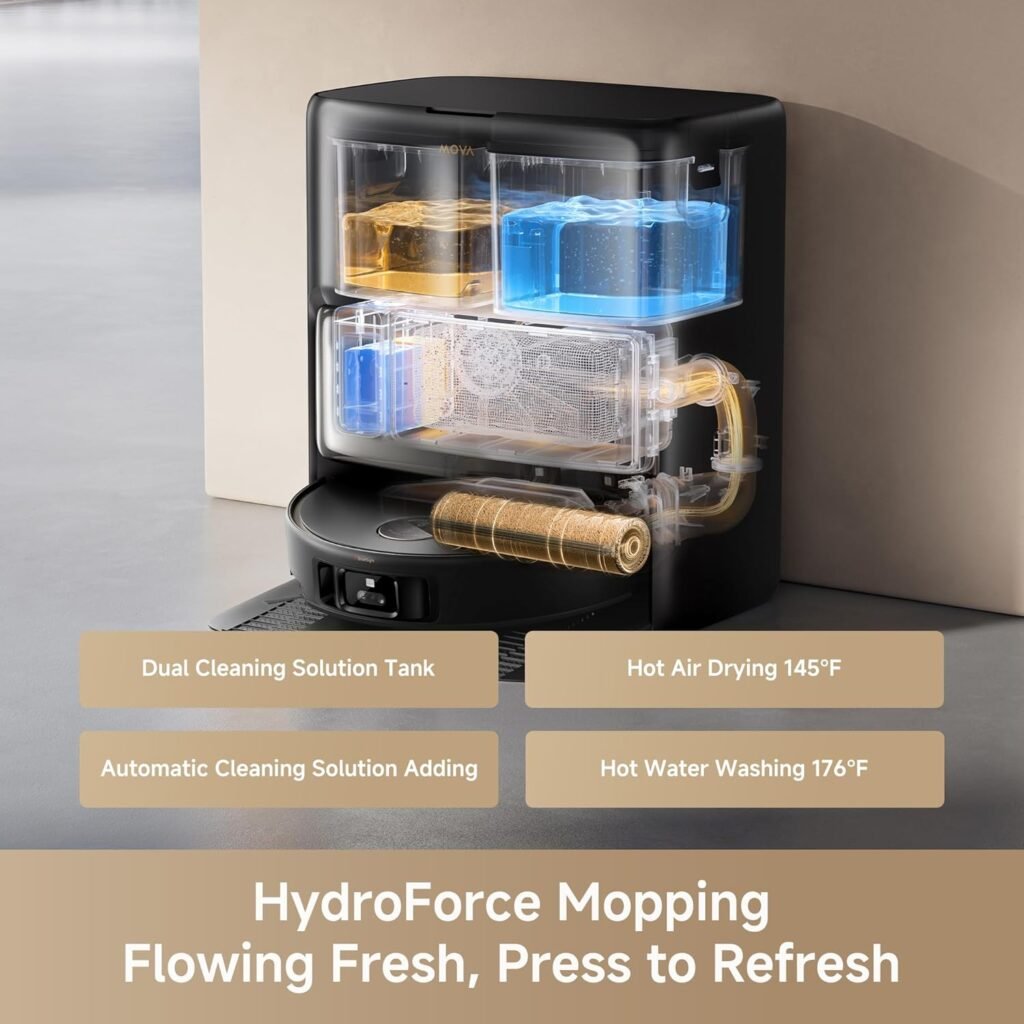
2) Dock intelligence: self-washing + drying
A dock that can:
- wash pads thoroughly (ideally hot water),
- dry pads (reduces odor/mildew),
- manage clean and dirty water,
is what makes daily mopping sustainable. (Dreame’s L50 Ultra pages emphasize hot-air drying and dock-managed refills, for example.)
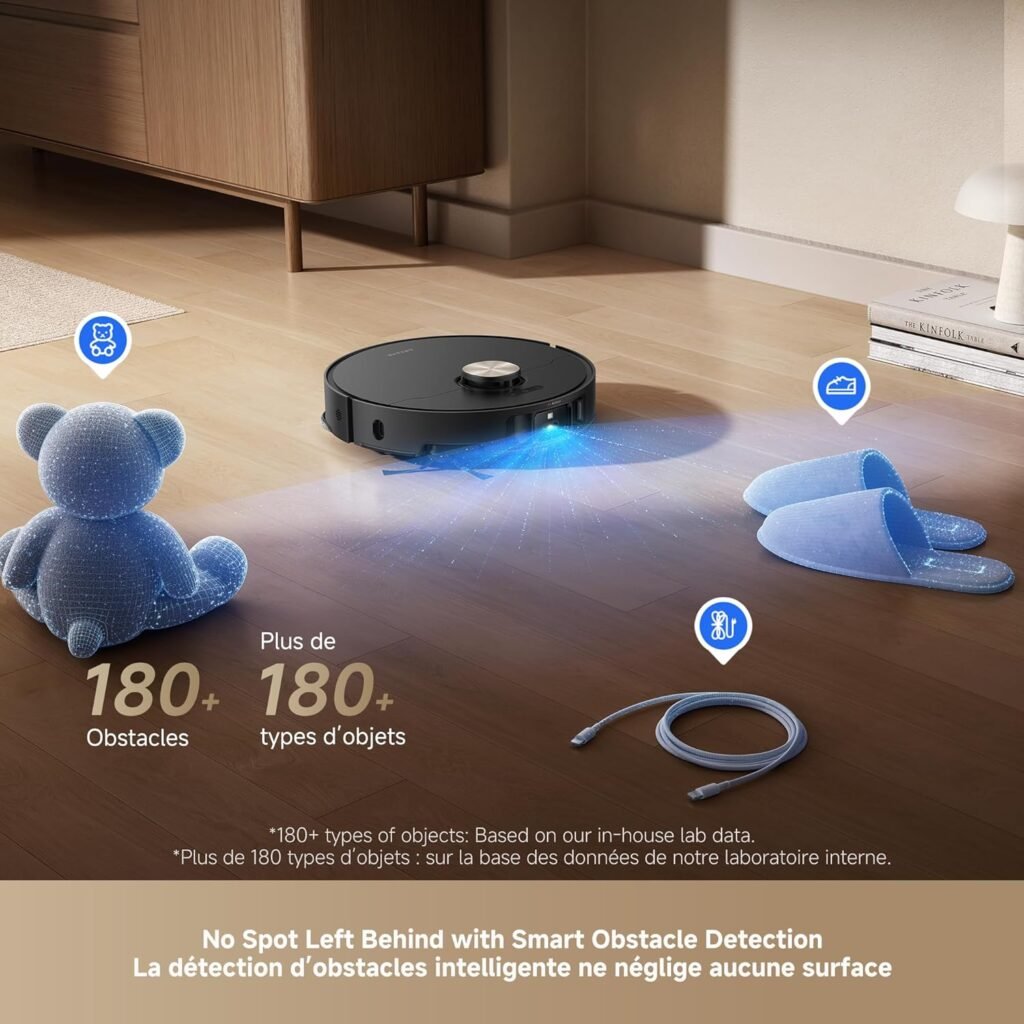
3) Obstacle avoidance you can trust
“Robot got stuck” is the #1 reason people stop using these. Good obstacle avoidance reduces rescues and makes schedules realistic. Independent reviewers (e.g., Vacuum Wars) routinely test navigation and obstacle performance for high-end bots like the Roborock Qrevo CurvX.
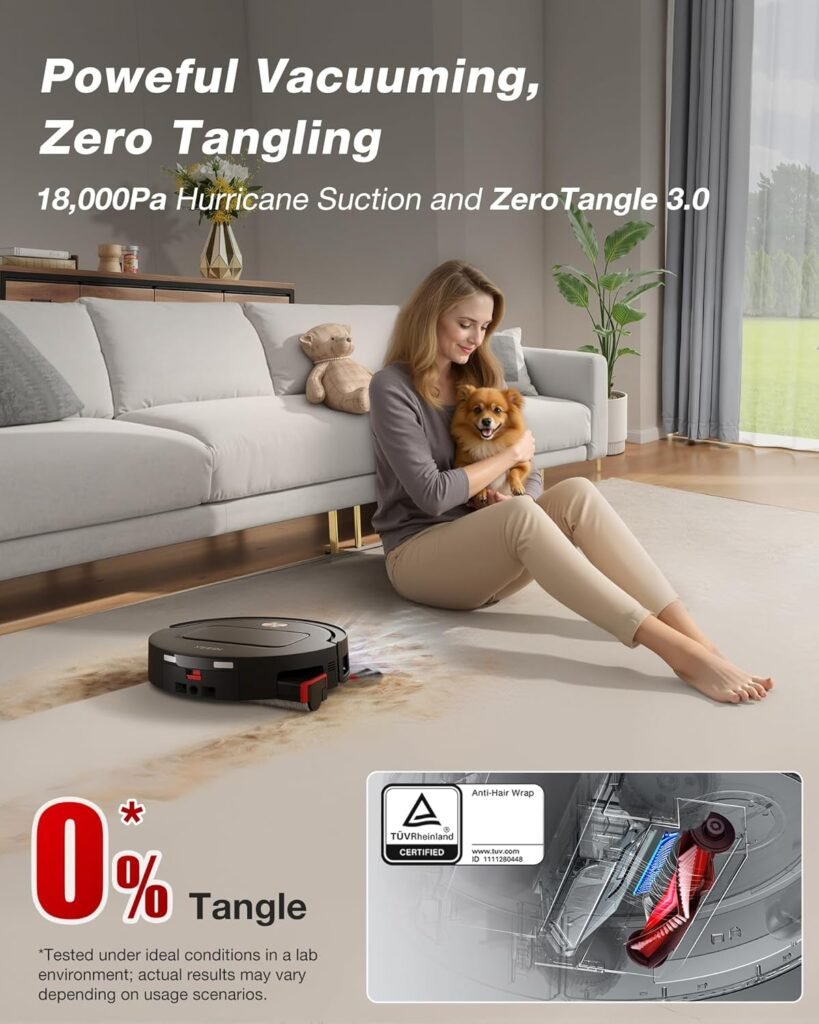
4) Hair handling (especially for pets)
Anti-tangle brush design is not a luxury if your home has long hair or pets. Some models explicitly market dual anti-tangle systems for this reason.
5) App controls that match real life
Look for:
- room-by-room cleaning,
- “no-mop zones,”
- carpet boost settings,
- scheduled routines,
- multi-floor mapping (if needed).
3) Carpet reality check (important)
A combo can be excellent on hard floors and still be just “fine” on carpet.
If your home is mostly carpet, you may get better results with a dedicated robot vacuum designed around carpet agitation and deep pickup. If your home is mostly hard floors with rugs, a combo is usually the best value because it handles both daily vacuuming and wet cleaning.
This expectation-setting aligns with what many 2026 buying guides emphasize: the best models are chosen based on use case (hard floors, carpets, pets, mopping performance), not a single spec like suction.
If you are also considering buying other digital devices, check out this post for a detailed guide:
The Ultimate Buyer’s Guide to Choosing Digital Tools and Smart Devices on Amazon
4) Best robot vacuum cleaner and mop combos to consider in 2026
Best Overall Hands-Off Experience (Most Homes)
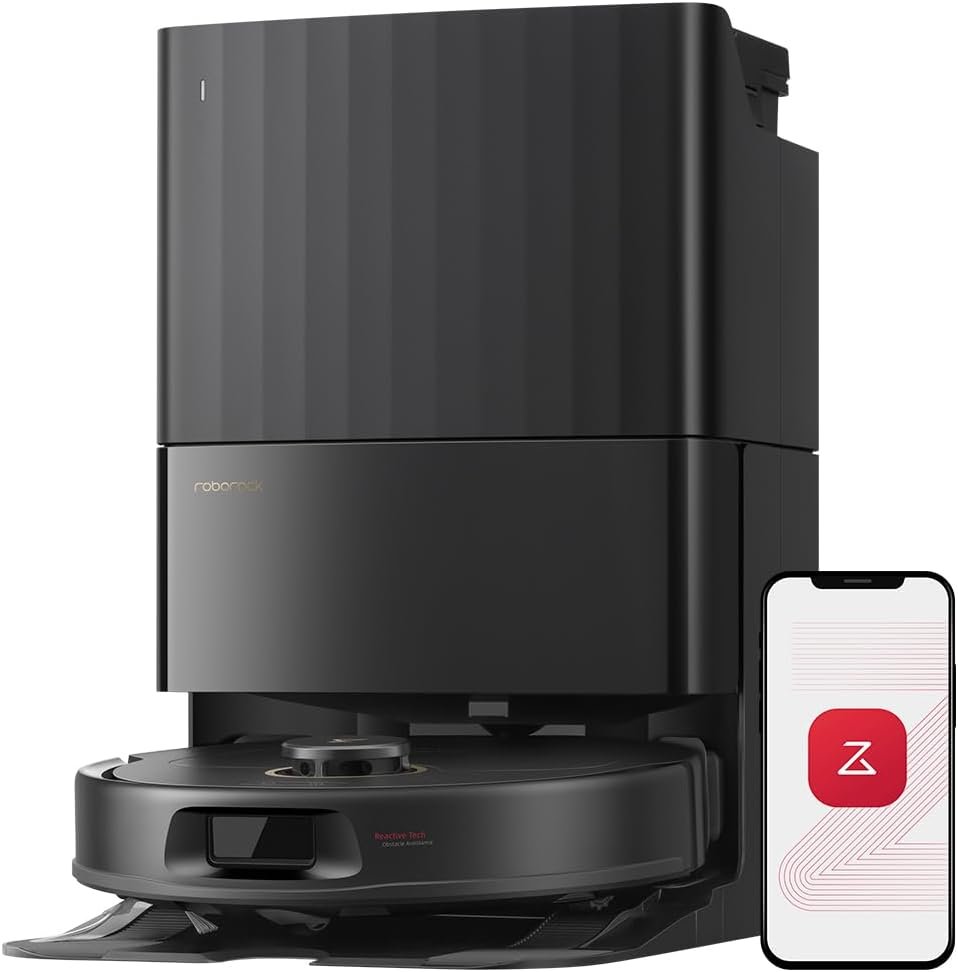
Best for: Busy homes, pets, mixed flooring, low furniture, obstacle-heavy layouts
Typical price range: Premium $500-$2000
Why it stands out
- Ultra-slim body reaches under beds and couches many robots miss
- Advanced obstacle avoidance reduces daily “rescue missions”
- Dual anti-tangle brush system handles pet hair well
- Self-washing dock with hot water cleaning and pad drying
- Mop-lift and intelligent carpet handling for mixed floors
Reality check
- Premium pricing
- Overkill if you only need light mopping
Bottom line:
If you want a robot that genuinely replaces most vacuuming and routine mopping, this is one of the most complete systems available in both Canada and the U.S.
Best Balance of Automation and Value
Best for: People who want strong automation without jumping to the most expensive tier
Typical price range: Upper-mid $400–$1800)
Why it stands out
- Highly automated dock (self-washing, drying, water management)
- Strong mopping system compared to most mid-range combos
- Good navigation and room mapping
- Widely available through Amazon and major retailers in CA & US
Reality check
- Still not a carpet specialist
- Large dock footprint
Bottom line:
A strong “sweet spot” option if you want near-flagship features at a more reasonable cost.
Best Mopping-First Option
Samsung Jet Bot Combo (select models)
Best for: Mostly hard floors where mopping quality matters more than carpet performance.
Why it stands out
- Excellent scrubbing performance on dried spills
- Strong floor contact and consistent mop pressure
- Good build quality and brand ecosystem support
Reality check
- Mediocre carpet performance compared to Roborock/Dreame
- Expensive for mixed-floor homes
Bottom line:
If mopping is your top priority and carpets are minimal, Samsung’s combo models deserve a look.
Best Value Under the Premium Tier
Yeedi M14+
Best for: First-time buyers who want real scrubbing without flagship pricing
Typical price range: Mid ($700- $1800)
Why it stands out
- Scrubbing-style mop (not just a wet pad)
- Self-cleaning dock with drying
- Competitive features for the price category
- Easy to find in both Canada and the U.S.
Reality check
- Long-term durability less proven than Roborock/Dreame
- Navigation not as refined in cluttered homes
Bottom line:
One of the better entry points if you want a real vacuum-mop combo without spending top dollar.
High-Power Alternative for Edge & Corner Cleaning
Best for: Large homes, edge-cleaning obsessives, power-focused buyers
Typical price range: Upper-mid to premium ($600–$3500)
Why it stands out
- Very high suction rating (useful on hard floors)
- Roller-style mop with continuous rinsing
- Extended side brushes for edge cleaning
- Mop-lift for carpets
Reality check
- Higher energy use than average
- Not as widely reviewed as top-tier competitors
Bottom line:
A compelling option if edge cleaning and raw power matter more than minimal energy usage.
5) Buying checklist (use this before you buy)
Your home:
- Mostly hard floors + rugs → combo is ideal
- Mostly carpet → consider dedicated vacuum first
Must-have features for busy homes:
- Scrubbing-style mop (spinning/vibrating/roller)
- Self-washing dock + mop drying
- Reliable obstacle avoidance
- Anti-tangle brush design (pets/hair)
- Mop lift or carpet-safe behavior
Nice-to-have (but not always necessary):
- Ultra-slim body (low furniture)
- Threshold climbing (if you have transitions)
- Water hook-up / auto-drain (only if your setup supports it)
If you want to narrow this down fast: choose your floor type (mostly hard floors vs mostly carpet), then decide if you want “mopping-first” or “balanced performance.” That will eliminate 70% of bad-fit purchases.
Conclusion: Where AI in Home Cleaning Actually Makes Sense
AI doesn’t need to feel futuristic or complicated to be valuable. Sometimes, its best use is simply removing friction from everyday life. Modern robot vacuum and mop systems are a clear example of AI working quietly in the background—mapping spaces, recognizing obstacles, adjusting to different surfaces, managing water and dirt, and making practical decisions without constant input from the user.
That said, not every robot vacuum and mop delivers the same experience. The real difference comes down to how well the AI is implemented: navigation accuracy, obstacle avoidance, intelligent floor detection, and dock automation matter far more than headline specs like suction numbers. When those elements work together, the result isn’t just a cleaner floor—it’s time saved, mental load reduced, and consistency you don’t have to think about.
For homes with mostly hard floors, pets, or busy schedules, an AI-powered robot vacuum and mop with a self-washing dock can genuinely replace much of the routine cleaning work. For carpet-heavy homes or cluttered layouts, expectations need to be adjusted, or a different type of solution may make more sense. As with any AI tool, the goal isn’t perfection—it’s choosing the right system for the job.
At DigitalToolsHub, we focus on AI tools that deliver practical value, not just impressive marketing. If you approach robot cleaners with that mindset—matching features to your home, understanding the trade-offs, and prioritizing real-world performance—you’re far more likely to end up with a solution that actually improves your day-to-day life rather than becoming another unused gadget.
Are robot vacuum and mop combos with self-washing docks worth it?
They’re worth it for busy homes with hard floors, pets, or frequent messes because the dock keeps mop pads cleaner and reduces daily manual work. The dock is the feature that makes mopping feel truly hands-off.
Do these robots work on carpet?
They can vacuum carpets, but performance varies by model and carpet type. If your home is mostly carpet, a dedicated robot vacuum may outperform a combo. For mixed floors, look for mop-lift or carpet-safe mopping behavior.
What mop system should I look for?
Prioritize scrubbing-style systems (dual spinning pads, vibrating pads, or roller mops) rather than a stationary wet pad. Scrubbing tends to clean dried spills better and reduces streaking.
How much maintenance is realistic?
Expect to refill clean water, empty dirty water, and occasionally clean the dock and brushes. You’ll also replace consumables like pads and filters. The goal is “low effort,” not “zero effort.”
What causes most robot vacuum-mop failures in real homes?
The biggest issues are getting stuck (cables/clutter), poor edge cleaning, and weak mopping systems that smear dirt. Obstacle avoidance and a self-washing dock reduce these problems significantly.
For more posts on other digital devices, visit our blog page.
Please feel free to share this post on social media or send in your comments.
Contact Us for specialised services.
Affiliate Disclosure
As an Amazon Associate, we earn from qualifying purchases.