Quick Summary
Best for: Podcasters, streamers, educators, content creators
Sound: Clear, detailed, low noise
Ease of use: Plug-and-play
Build: Solid metal construction
Value: Strong, considering features and accessories
Introduction
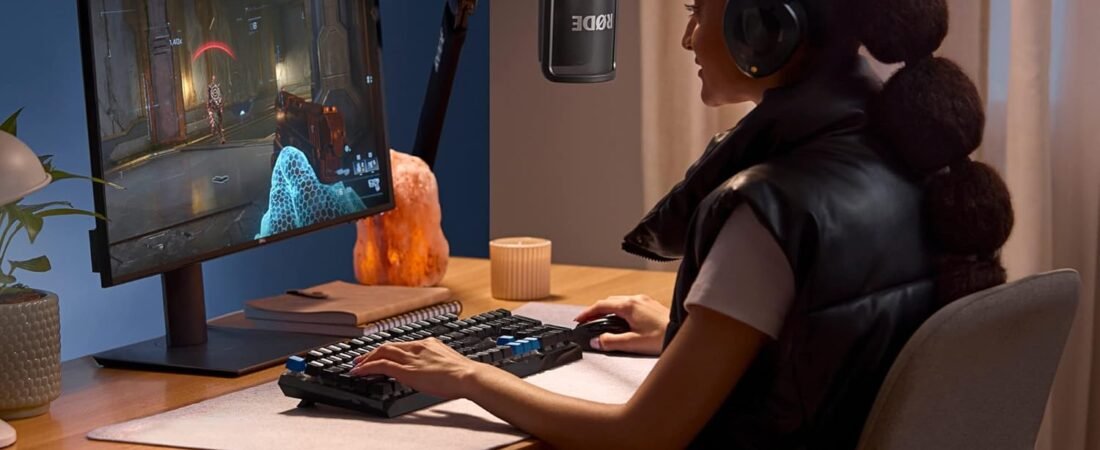
USB microphones have become the entry point for many podcasters and content creators, but not all USB mics are created equal. The RØDE NT-USB and its newer sibling, the NT-USB+, sit firmly in the category of “professional USB microphones”—designed for people who want clean, studio-grade audio without building a full XLR setup.
If you’ve read our ultimate guide on podcast and audio recording tools, you already know that simplicity matters, especially early on. The NT-USB line exists for creators who want to focus on recording rather than troubleshooting interfaces, drivers, and gain staging.
This overview explains what the RØDE NT-USB and NT-USB+ actually offer, how they differ, and where they realistically fit in a modern podcasting or content creation workflow.
Product Overview: NT-USB vs NT-USB+
RØDE currently offers two versions of this microphone:
- RØDE NT-USB (original)
- RØDE NT-USB+ (newer model)
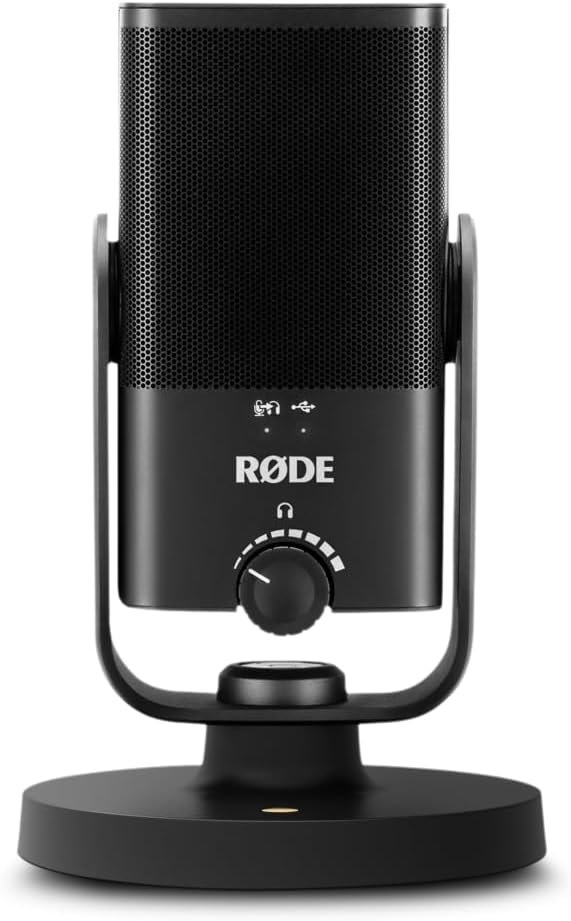
Both are large-diaphragm USB condenser microphones using a cardioid pickup pattern, meaning they focus on sound coming from directly in front while reducing noise from the sides and rear.
The core difference lies in audio resolution, connectivity, and onboard processing.
The original NT-USB records at 16-bit / 48kHz, which is sufficient for most podcasting platforms and voice applications. The NT-USB+ upgrades this to 24-bit / 48kHz, giving you more headroom during recording and cleaner results when adjusting levels in post-production.
In practical terms, the NT-USB+ produces:
- Lower perceived noise
- More flexibility when editing
- Better results with quieter vocal passages
Key Features and Specifications
Audio Performance
Both microphones cover the full 20Hz–20kHz frequency range, which exceeds what’s required for voice recording. Where the NT-USB+ stands out is its updated internal preamp design, which delivers a noticeably lower noise floor and improved clarity during softer speech.
There is a mild presence lift in the upper midrange that helps voices cut through a mix without aggressive EQ. This makes recordings sound clear and articulate even before processing.
Connectivity and Power
- NT-USB: USB-B connection
- NT-USB+: USB-C connection
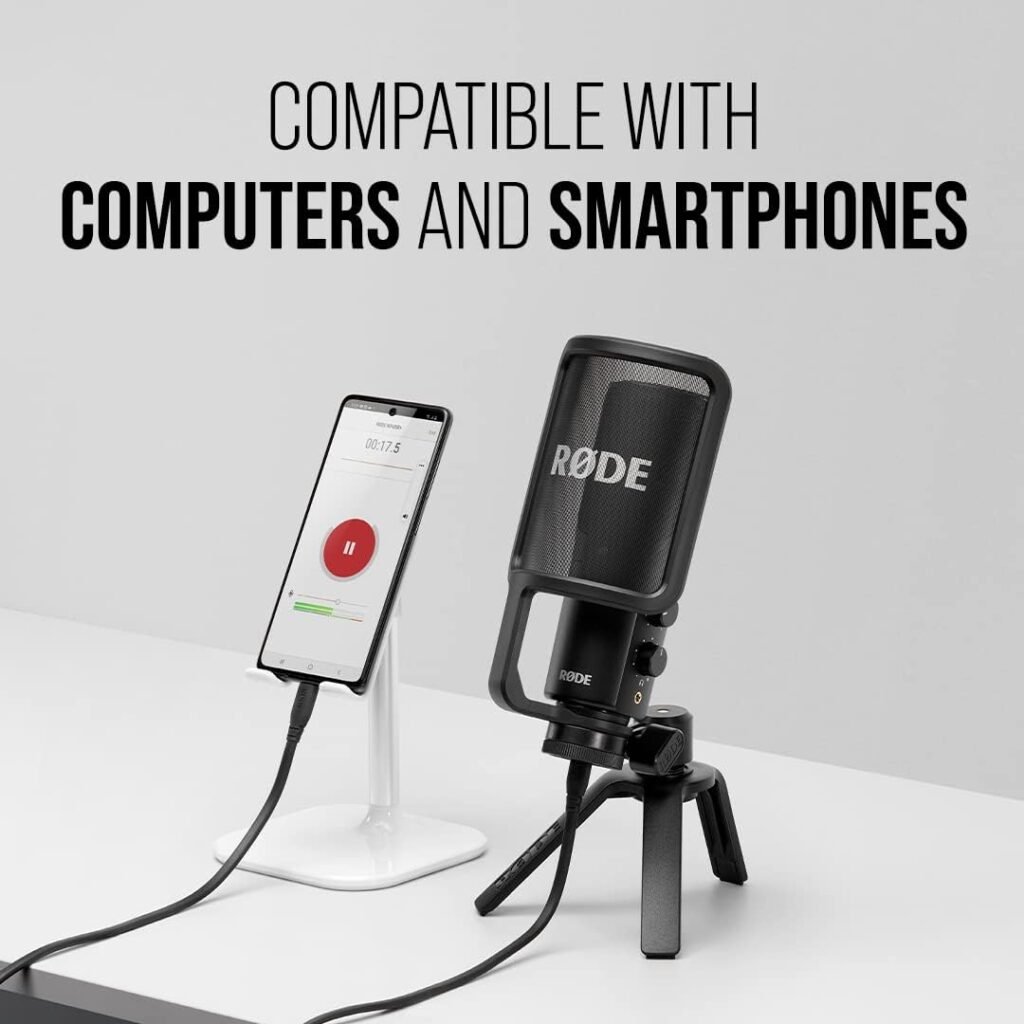
The move to USB-C on the NT-USB+ significantly improves compatibility with modern laptops, tablets, and mobile devices. Both microphones are bus-powered, so there’s no external power supply required.
You plug the mic in, select it as your input device, and record.
Monitoring and Controls
One of the most practical features of the NT-USB line is zero-latency monitoring via the built-in headphone output.
Listening to your voice in real time—without delay—makes a measurable difference in recording comfort and vocal consistency. Both versions include:
- A headphone volume control
- A blend control to balance mic input and system audio
This is especially useful for:
- Podcast recording with background audio
- Live commentary
- Streaming and screen recordings
The headphone amplifier is strong enough to drive common studio headphones without distortion.
Built-In DSP (NT-USB+ Only)
The NT-USB+ integrates with RØDE’s software ecosystem, allowing access to onboard digital signal processing, including:
- Compression
- Noise gate
- High-pass filtering
- Vocal enhancement tools
Because this processing runs on the microphone itself, it doesn’t add noticeable latency or consume computer resources. For beginners, this means better-sounding audio without needing to learn complex DAW workflows immediately.
Real-World Recording Performance
Sound Quality in Untreated Rooms
In typical home environments—bedrooms, offices, shared spaces—the NT-USB+ delivers clean and intelligible audio with minimal self-noise. While it is still a condenser microphone (and therefore more sensitive than a dynamic mic), its cardioid pattern does a respectable job of rejecting off-axis noise.
Keyboard noise, computer fans, and mild room reflections are present but controlled, especially when the mic is positioned correctly (about 4–6 inches from the mouth).
Background Noise Considerations
If you record in a very noisy environment, a dynamic microphone may still be the better option. However, for most home creators, the NT-USB strikes a reasonable balance between detail and noise control—particularly when paired with basic acoustic treatment.
Use Cases
The NT-USB and NT-USB+ are well-suited for:
- Podcast recording
- YouTube voiceovers
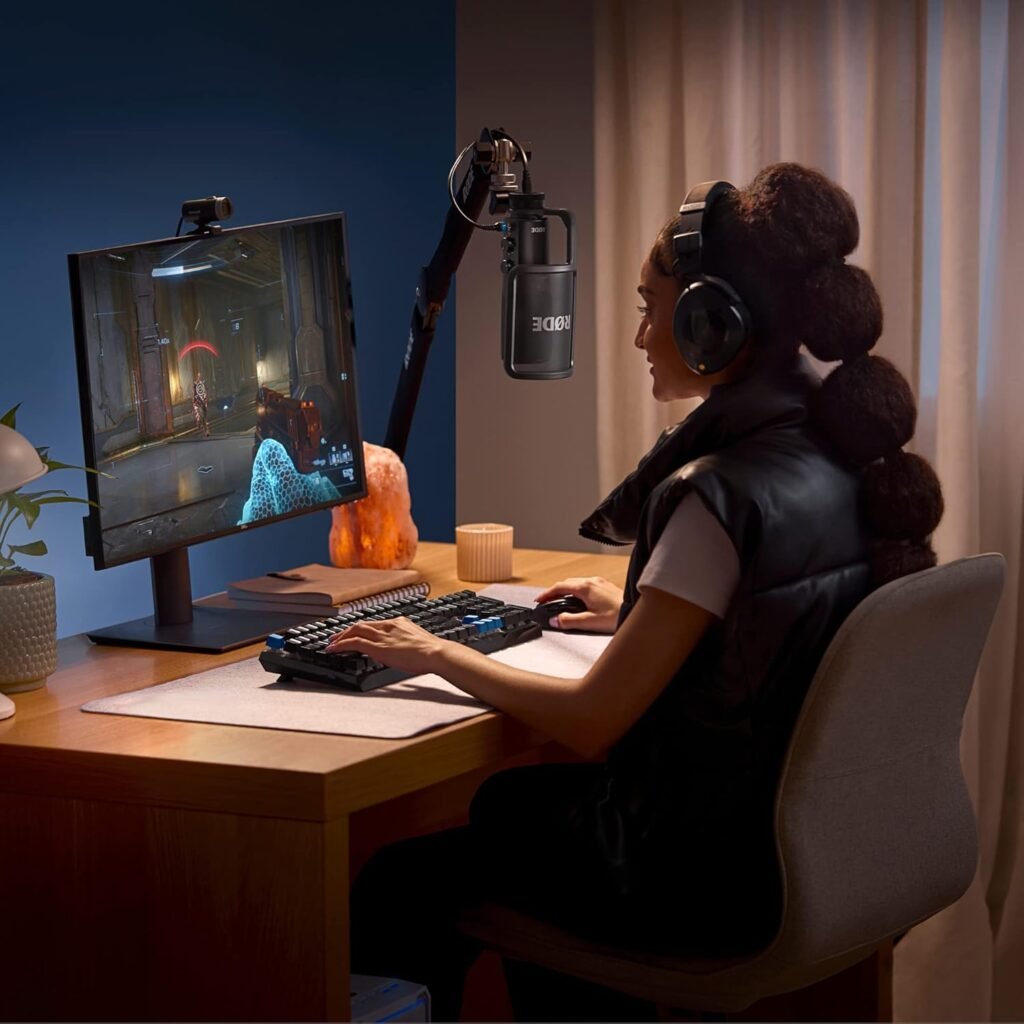
- Streaming and live commentary
- Online courses and tutorials
- Professional video calls and presentations
The microphone’s versatility makes it a strong choice for creators who work across multiple formats without wanting multiple microphones.
Build Quality and Accessories
The microphone body is solid metal and feels durable enough for long-term use. Included accessories typically cover what beginners need to start recording immediately:
- Pop filter
- Desktop stand
- USB cable
The desktop stand works, but it places the microphone relatively low. Many users eventually switch to a boom arm for better positioning and comfort during longer recording sessions.
Comparisons and Positioning
NT-USB vs NT-USB+
If you’re buying new, the NT-USB+ is the clear choice due to:
- 24-bit recording
- Lower noise floor
- USB-C connectivity
- Built-in DSP features
The original NT-USB remains usable, especially if found at a discount, but the newer model offers better long-term value.
NT-USB vs Other USB Microphones
Compared to entry-level USB microphones, the NT-USB+ delivers:
- Cleaner audio
- Better monitoring
- Stronger build quality
- More consistent vocal presence
Compared to multi-pattern USB mics, it prioritizes focused voice capture over versatility—an advantage for podcasting.
Price and Long-Term Value
At its typical price point, the NT-USB+ sits in the middle of the USB microphone market. While not the cheapest option, it often replaces the need for:
- An audio interface
- XLR cabling
- External preamps
When factoring in included accessories and reduced setup complexity, the overall value becomes clear—especially for creators who want professional results without technical overhead.
Final Takeaway
The RØDE NT-USB and NT-USB+ are designed for creators who want reliable, professional-sounding audio without building a full recording chain. The NT-USB+ in particular fits neatly into the “serious beginner to intermediate” category, offering sound quality that holds up well as your content grows.
If your goal is to record consistently, sound polished, and avoid unnecessary complexity, this microphone line does exactly what it promises.
Quick Summary
Best for: Podcasters, streamers, educators, content creators
Sound: Clear, detailed, low noise
Ease of use: Plug-and-play
Build: Solid metal construction
Value: Strong, considering features and accessories